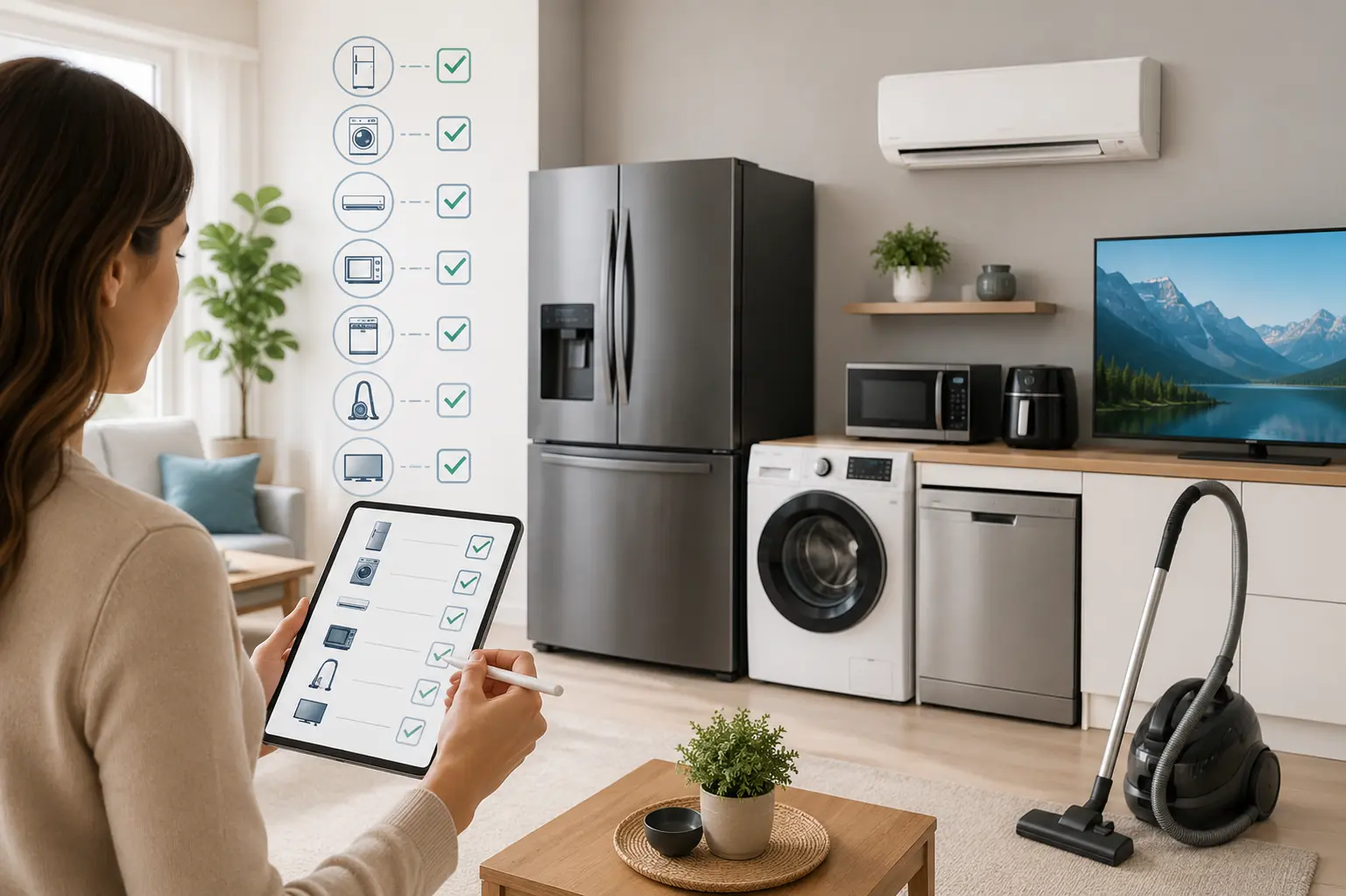
For most consumers, the acquisition of a refrigerator or washing machine is as easy as purchasing a T-shirt. They spot a good price, check one specification, and make a payment. But the appliance will be used for eight to twelve years, and every carelessness made will manifest itself on the electricity bill, service call, or “why on earth didn’t I check this” moment.
However, making smarter buying decisions only requires fifteen minutes of your time beforehand to compare what might sound like the most generic tip ever received by a consumer, continued in the text below.
Are You Buying for Your Actual Household, or an Imagined One?
Ensure the capacity fits actual needs and not dreams. A 7-kg washing machine purchased for a family of two will run half-empty every time, and a 190-liter refrigerator purchased for a family of five will call for a grocery trip once in three days.
Before considering different models, make a list of how many people are in your family, how often you cook, and how much food you store. This simple step will save you a lot of remorse afterwards about the ill-chosen appliance.
Does the BEE Star Rating Actually Change Anything?
They do, and even more so over the years of using an appliance. Changes made by the Bureau of Energy Efficiency in the star classifications of appliances mean that an appliance with five stars is more likely to save you energy than a three-star appliance from the same brand, as the difference in BEE standards of testing is compelling.
Although the purchase price of a 5-star appliance is higher, the lower running costs, especially for daily-use appliances such as air conditioners, refrigerators, and washing machines, make it worth the investment in a few years. So, check the ratings mentioned on the website, not only the brand name.
Will It Physically Fit Your Home?
Make sure to take your measurements before you start liking the appliance. For example, check if you have enough door clearance for your refrigerator, check the depth of the window air conditioner bracket, and consider the space at the back of the washer for plumbing amidst any other specifications you might be missing. While buying your appliance online, check the product’s dimensions against your requirements at home, not with your guesses.
Is There Real Service Support Where You Live?
A good appliance needs access to service options if you do not want to face problems in the future. Therefore, it is vital to check if the brand offers service in your city before making the purchase. This is especially important for large electrical items because they need installation and follow-ups, which become problematic without the right people.
What’s the Real Price, Not the Sticker Price?
Consider your installation expenses, EMI costs, and exchanges before making a comparison. A split AC that is advertised at ₹3000 less than its competitors can actually be more expensive. Similarly, it is also important to watch out for hidden charges associated with a no-cost EMI and exchange policies regarding your old appliance.
What Does the Warranty Actually Cover?
When it comes to appliances, most warranty programs only apply key components rather than the whole unit. For instance, a washing machine advertised as having a “10-year warranty” only offers a 10-year warranty on the motor and nothing else, which is often limited to 1 or 2 years. Make sure to read the details of the warranty when making your purchase decision, since a long warranty term may not necessarily mean a good deal. For instance, a store provides a free first service/first demo with a purchase that allows customers to get acquainted with the product and catch potential manufacturing defects earlier.
Online, In-Store, or Both?
The smartest consumers do both: conduct online research and confirm the findings in brick-and-mortar stores. Doing the research online is by far the fastest way to compare features and prices, but buying an appliance is a tactile experience: you would want to open the fridge, open the washing machine, and feel the remote control of the TV set. If you know a store that combines both a regular showroom and an online store with the same prices and stock, you can take advantage of both channels. The downside of many ordinary electronic stores is that they operate online only.
The Checklist, In One Place
Before you check out, confirm you’ve covered:
- Usage: Match the capacity to your actual needs and not dreams.
- BEE: Consider how often you will be using the appliance.
- Size measurements: Ensure you measure the appliance dimensions and your space as well.
- Service Center: Confirm that the appliance you are buying is within the reach of the service center and not just indicate your state as a whole.
- Final price: Ensure you take into account all the associated costs, including installation, EMI, and exchange payments.
- Warranty: Be aware of what the warranty entails and for how long.
- Purchase method: Confirm that you buy your appliance through a store that has both online and offline representation.
Where This Gets Easier
This is precisely the gap that Rakesh Retails had identified as its opportunity to fill as an exceptional electronics and home appliances retailer in Delhi NCR: physical stores offering you the chance to try out the product by seeing it, taking measurements, opening the refrigerator door to check for yourself one model while comparing it to another one already present in the store, supported by the online store with genuine BEE certified products at similar prices.
All products come with a manufacturer’s warranty, which in the case of most electrical appliances, includes free installation as well as easy EMI options available at checkout.