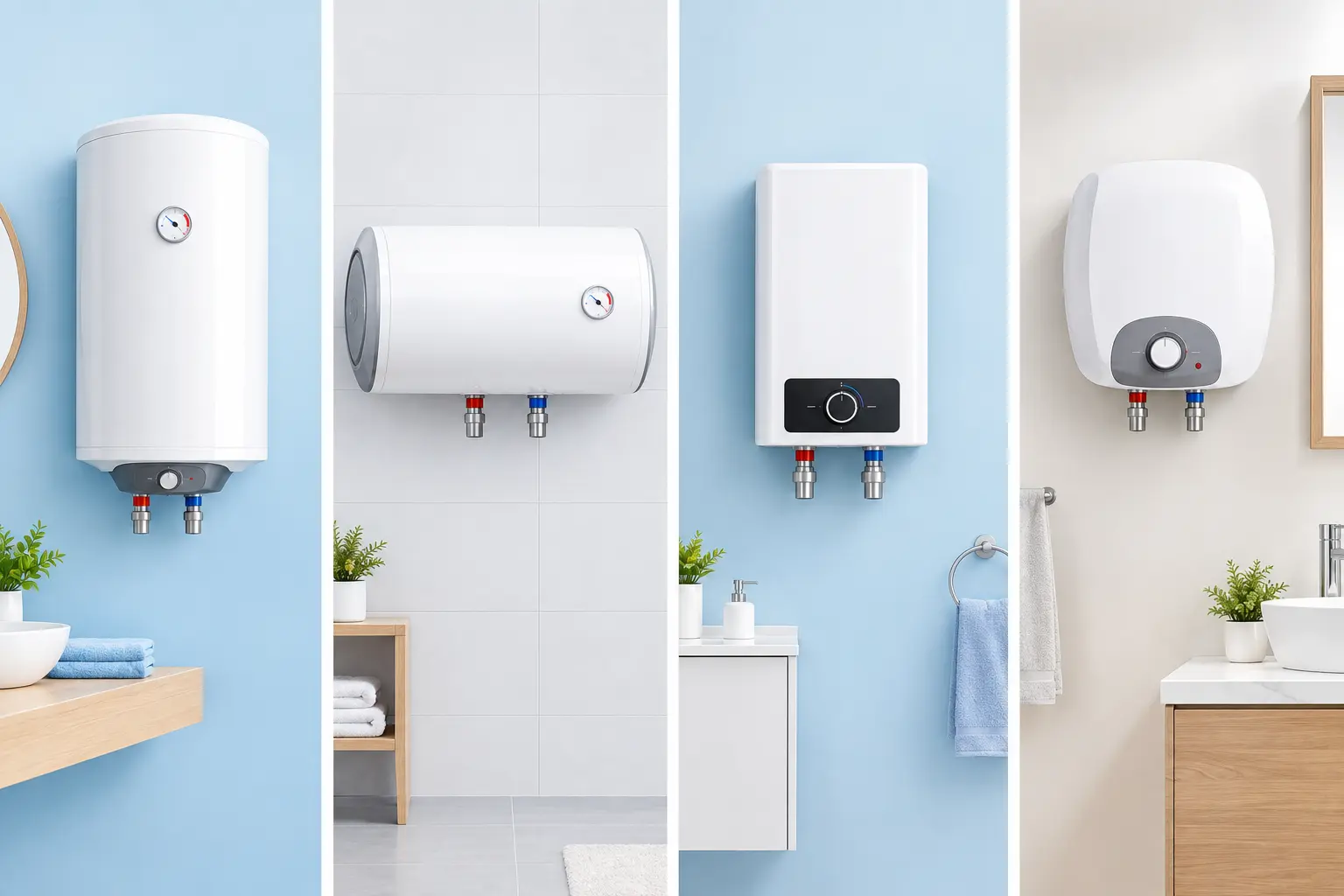
Purchasing a geyser involves three important factors: capacity (10-15 liters when used in single bathrooms, 25 liters or higher for family homes), geyser type (instant geyser for quick filling, storage geyser for constant hot water, or heat pump geyser to save on electricity bill), and safety certification (always look for an ISI mark and an auto switch-off feature). You can easily figure out the right geyser for you by checking the three features according to your household size and its hot water usage.
Why Picking the Right Geyser Actually Matters
Typically, people don’t realize that the geyser on the showroom floor is not the geyser they need for their homes. The price can be very low, and purchasing a cheap geyser will allow you to worry less about the supply of hot water during the winter months. However, if a person purchases a geyser that is too big for their home, they will have to heat more water than they really need. A buying guide on geysers is not about brands – instead, it is about choosing the device according to your specific lifestyle, bathroom conditions, and the size of your electricity bill.
It is important to remember that geysers are not “buy and forget” products. Such a device is installed on the wall and has performed its functions for years. Therefore, it is critically important to choose correctly to save money for years.
Storage vs Instant vs Heat Pump: Which Type Fits You?
This is the initial choice to make which influences nearly everything else.
Storage geysers – Storage geysers maintain and heat some water in the tank, which provides hot water on demand. They are good for large families or houses with many bathrooms, or if you need a constant supply.
The con of it is standby heat loss and re-heating even when you don’t use it.
Instant geysers – Instant geysers heat the water as they are required and are small. They work very quickly, which makes them good for single flats and places with unstable electricity. However, they have limitations because of the flow rate.
Heat pump water heaters – Heat pumps extract heat from ambient air. The initial investment is high, but the amount of energy used for water heating decreases significantly when used for a long period of time.
How to Calculate the Right Capacity
No need to guess when you can use this simple formula:
- One person living in one bathroom needs a geyser of 6 to10 liters.
- 2-3 people using one bathroom need 15 liters of storage geyser.
- 4-5 people living in one or two bathrooms require 25 liters of storage units.
- A big family or people living in several bathrooms need 35 liters of unit or two different units.
In the case of using buckets instead of showers, you may buy a unit of smaller size. Conversely, shower fans can choose the bigger one.
Features Worth Paying Extra For
Not every feature warrants an extra cost, but there are a select few that stand out:
- Auto-cutoff/thermostat control – Temperature regulation that does not fry the device or keeps it on standby.
- Glass-lined or titanium tank coating – Resistant to corrosion, most relevant for hard water.
- Pressure release valve – One of the more basic safety features that shouldn’t be ignored.
- 5-star BEE rating – Directly results in lower monthly electricity bills.
Fancy app connectivity or voice control is cute but dispensable. Give safety and efficiency features the necessary premiums first.
People Also Ask: Fast Answers
How long does a geyser last?
Most geysers work well for 8-10 years with basic maintenance like de-scaling once in 2-3 years.
Is a 15-litre geyser enough for a family?
Yes, for a family of two or three with a low to moderate usage level. For larger families or shower-heavy households, consider going with 25L.
Which uses less electricity, an instant geyser or a storage geyser?
Instant geysers consume less electricity as they heat up only the quantity needed; however, storage geysers are more convenient for continuous hot water demand.
Is a heat pump geyser worth the extra cost?
If your house consumes a lot of hot water on a daily basis, then generally long-term electricity savings will justify the extra upfront costs within a few years.